by Maggie Rudnicki
Discovery of CRISPR-Cas9

Bust shot of Emmanuelle Charpentier (left; shorter woman with brown hair in a bob, wearing earrings and a black top) and Jennifer Doudna (right; taller, white woman with blond hair tied back, wearing earrings and a fuzzy black top) standing in front of a yellow backdrop and smiling at the camera

Bust shot of Feng Zhang (Chinese man with short black hair and glasses, wearing a white collared shirt), smiling at the camera
- Jennifer Doudna and Emmanuelle Charpentier of UC Berkley and University of Vienna discovered the CRISPR-Cas9 system
- Filed a patent for the use of CRISPR-Cas9 gene-editing technology in all cells in May 2012
- Published their work in Science in June 2012
- Feng Zhang of The Broad Institute at MIT filed a patent directed toward the use of the CRISPR-Cas9 system for cutting DNA in eukaryotic cells in December 2012
- Broad Institute paid extra for expedited examination of application, so it was approved first
What is CRISPR-Cas9?
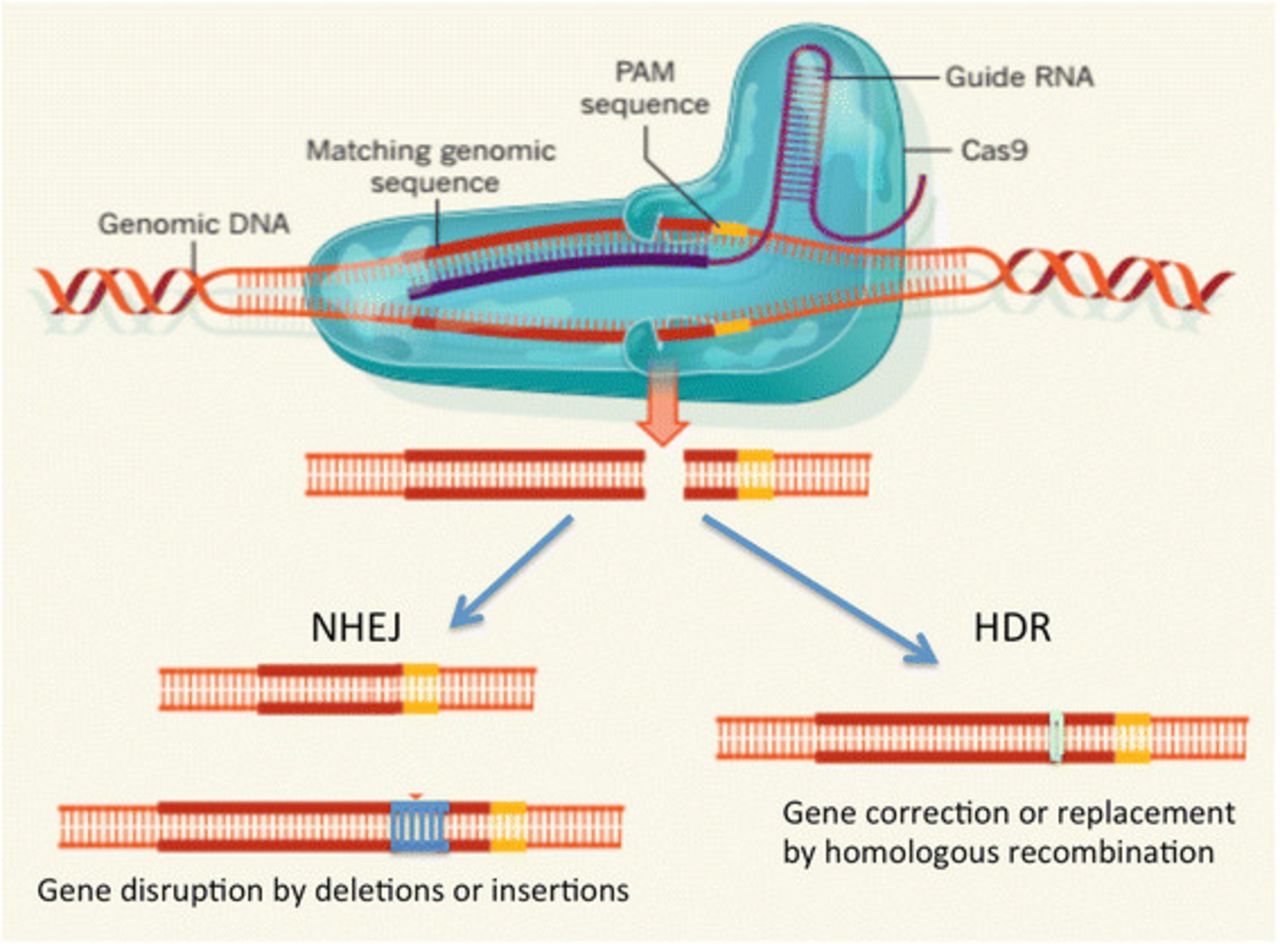
- CRISPR: Clustered regularly interspaced short palindromic repeats
- Cas9: CRISPR associated system – enzyme that cuts DNA (nuclease)
- System that creates breaks at specific sites in DNA
- Bacterial immune system
- Cell repairs break through non-homologous end joining or homology-directed repair
Applications

Microscopic image of a CRISPR T-cell. Round red body with straight flagellae(?) extending in all directions from a redder base; a smaller blue bumpy sphere is attached to the red body.

Diagram showing a pig and pointing to different organs to describe the associated diseases of which clinical xenotransplantation could work as therapy.

Diagram of how the cystic fibrosis transmembrane conductance regulator works at the molecular level.
- Creating animal models for human disease
- Studying gene function via knockouts
- Xenotransplantation
- Transgenic plants and animals
- Immunotherapy and cancer treatment
- Treatment/prevention of genetic diseases
Should We Be Worried About CRISPR?
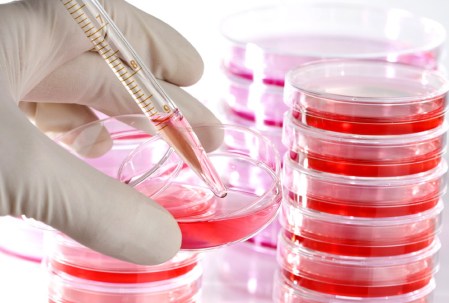
- Just 6 months after Doudna published on CRISPR 6 different research teams had successfully edited DNA in human cells
- University of California and University of Vienna have reserved the right to allow educational and other non-profit institutions to use the CRISPR-Cas9-related intellectual property for educational and research purposes
- First human trial using CRISPR genome editing approved 2016
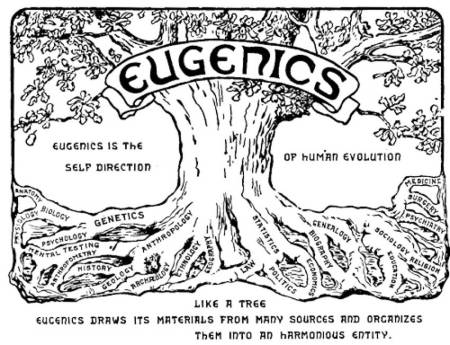
- Doudna and several other scientists published an article urging caution stating there is “an urgent need for open discussion of the merits and risks of human genome modification by a broad cohort of scientists, clinicians, social scientists, the general public and relevant public entities and interest groups”
- CRISPR isn’t the only tool being used to edit genomes
- Zinc finger nucleases, TALENS, DNA microinjection, Retroviral vectors
- Scientists intentionally use vague language – “prevention of serious diseases”
What is a “Serious Disease”?
- Cystic Fibrosis
- Hemophilia
- Depression
- Down Syndrome
- Hemochromatosis
- Turner Syndrome
- Lesch-Nyhan Syndrome
- Blindness
- Breast Cancer
- Myopia
- Achondroplasia
- Huntington’s
- Amyotrophic Lateral Sclerosis
- Sickle Cell Disease
- Homosexuality
- Muscular Dystrophy
- Autism
- Tetra-Amelia Syndrome
- Chron’s Disease
- Parkinson’s Disease
- Color blindness
- Deafness
- Hypochondroplasia
- Attention Deficit Disorder
- Albinism
- Diabetes
- Anxiety
- Left Handedness
- Osteogenesis Imperfectia
- Spina Bifidia
 Technology and Disability
Care to weigh in? Please leave a reply.